How the Marvel Rivals Map Picks Your Hero in 2026 Random Map Challenges
Want articles like this for your own video to promote it on YouTube and Google? Order them through the Telegram bot @sat_sit_bot. It writes articles around your video, embeds the video and publishes them on popular niche websites (no ads). Your first 50 articles are free.
· based on the channel Salty Phish
Key takeaways
- In the map-locked hero challenge, the random map you queue into decides which hero you are allowed to play for that match.
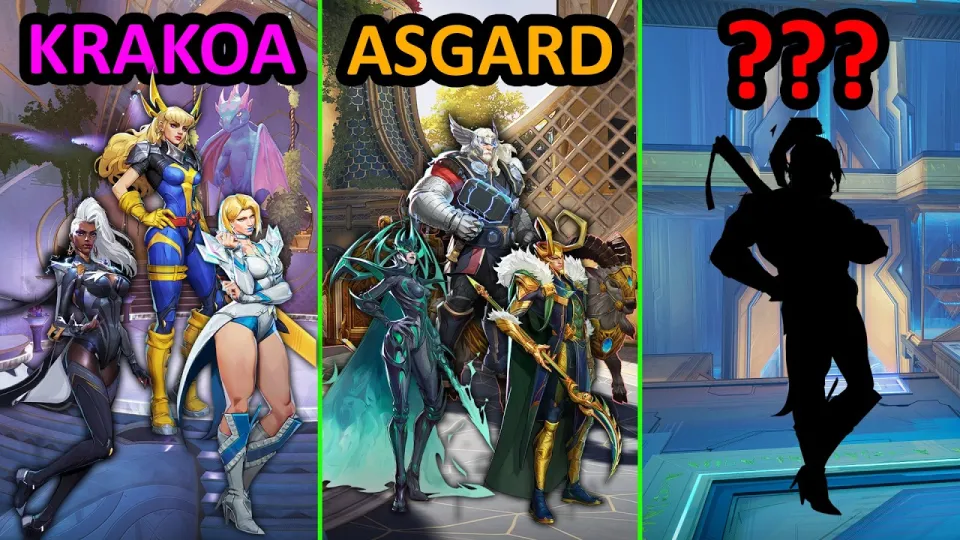
- Klyntar maps point to Venom, while Asgardian maps open up Thor, Loki and Hela.
- Marvel Rivals lore ties the Guardians of the Galaxy to Wakanda's spaceport and to the symbiote mission on Klyntar.
- Shin-Shibuya is a 2099 timeline map, so Punisher, Captain America and Iron Man all have a lore claim to it.
- Devil Dinosaur lives in New York with Moon Girl, which makes him a valid pick for Lower Manhattan.
Marvel Rivals map-based hero challenges work by locking your pick to the location the matchmaker hands you: the random map decides the roster, and you build a new team composition every game instead of defaulting to your main. On a Klyntar map that means Venom; on an Asgardian map it opens up Thor, Loki and Hela. The format turns quickplay into a lore quiz, and the debate over who "counts" for each location is most of the fun. Salty Phish runs exactly this ruleset on stream, which you can follow live at Salty Phish's Twitch channel for more casual Marvel Rivals sessions.
The rules are simple to state and hard to referee. Every queue is a fresh constraint, and the interesting part is not the shooting but the argument about which hero belongs on which map.
How the map-locked hero challenge works in Marvel Rivals
The core loop is one rule: the map you load into sets the legal hero pool for that match, and you cannot fall back on a comfort pick. A run through quickplay therefore produces a string of wildly different team compositions, from full Asgardian lineups to symbiote squads, without anyone deliberately drafting them.
The practical steps for running it yourself:
- Queue quickplay solo or with a group and accept whatever map appears.
- Before the spawn doors open, name the location and agree on the hero pool it allows.
- Assign each player a hero from that pool, filling at least one tank, one support and one damage dealer where the pool permits.
- Play the match out; do not swap to an off-map hero mid-game even if you are losing.
- Rotate to the next map and repeat, so the roster changes every single game.
The appeal is that Marvel Rivals has a large enough roster that almost every location has three or four defensible picks, and the argument over the edges of the pool is as entertaining as the match itself.
Which heroes fit which Marvel Rivals map
Map legality is decided by story ties, not by gameplay balance, so the pools are built from lore first. The clearest cases are the ones where a location is literally a character's home turf.
- Klyntar: Venom is the obvious lock, and the symbiote homeworld makes any Knull-adjacent pick arguable.
- Asgard: Thor, Loki and Hela are the natural core, with other Asgardians filling out the rest of the team.
- Wakanda maps: Black Panther leads the pool, and the Intergalactic Empire of Wakanda framing widens it considerably.
- Shin-Shibuya: a 2099 timeline location, which pulls in future-set characters rather than street-level New Yorkers.
- Lower Manhattan and Midtown: the broadest pool in the game, since almost every hero has spent time in New York.
The disagreements start the moment a map has a secondary location baked into it, because a single landmark can justify a hero who has no business being on the main roster for that region.
Where the lore rules get fuzzy
Lore-based pools break down whenever a map contains a building, a cameo or a timeline reference that quietly admits another hero. The most common disputes in this challenge come from exactly those details, and most of them have a defensible answer.
Shin-Shibuya is a 2099 map, not just a Tokyo map
The frequent mistake is treating Shin-Shibuya as a generic futuristic city and locking it to Spider-Man alone. It is a Marvel 2099 location, which means the future-set roster qualifies: Punisher 2099 and Captain America 2099 both have a claim, and Iron Man counts too because the Stark-Fujikawa building stands on the map and the character has dialogue referencing it. Anyone building a strict pool for this location should treat it as a timeline rule rather than a geography rule.
Wakanda's spaceport is a Guardians hub
Wakanda in Marvel Rivals is framed as the Intergalactic Empire of Wakanda, and its spaceport is not decorative. In the game's lore the Guardians of the Galaxy are hired by Black Panther to deal with the symbiotes on Klyntar while Knull tries to take control of Bast, and the Milano can be seen departing the Wakanda spaceport in map animations on the way to that mission. That makes Star-Lord, Rocket, Groot, Gamora, Mantis and Drax legitimate picks for Wakandan maps, and a stretched case can be made for Venom as well. Winter Soldier also belongs in the pool: in Rivals canon the Wakandans built him a new arm, and he has an interaction with Iron Man where he dismisses a Stark upgrade in favor of what Wakanda and Steve Rogers gave him.
New York maps have the widest pool of all
Lower Manhattan and Midtown are where the loosest rulings happen, because New York is the default setting for a huge share of Marvel characters. Devil Dinosaur is a legitimate New York pick: he lives in the city with Moon Girl, and a giant dinosaur operating in Manhattan is established canon rather than a stretch. The Collector's museum on the Knowhere-adjacent maps creates a similar loophole, since Jeff, Psylocke and Mantis were all imprisoned there in the backstory, which gives them a claim to maps they would otherwise have no connection to.
Common disputes players raise about map hero pools
Most arguments in this format follow a predictable pattern, and knowing the usual objections makes the rules easier to settle before the match starts.
- Timeline versus location. A map set in the future admits future versions of heroes even if the present-day character has never been there. Decide in advance which rule wins.
- Landmark claims. A single building, billboard or wanted poster on a map is enough for some players and not others. Agree on a threshold, such as a named in-game location or a voice line.
- Skin-based eligibility. Cosmetic lines sometimes have lore backing, such as Wakanda-linked skins for characters who otherwise would not qualify, and groups differ on whether skins count.
- Team-up bonuses. Restricting the pool to heroes with enhanced team-ups is a popular variant that produces very different compositions from a pure lore pool.
- Off-map swaps. Losing badly tempts players to break the rule. Fix the penalty before the first match, whether that is a lost point or sitting out the next round.
Why the format suits Marvel Rivals quickplay
Marvel Rivals rewards hero flexibility, and a map-locked challenge forces it faster than any other casual format. Players who normally instalock one damage dealer end up on support or tank because the location demands it, and the resulting matches are messier and more varied than a standard quickplay run.
It also scales well. The challenge works with a full six-stack, with a duo, or solo with random teammates who agree to follow the location rule for one match. Because the pool changes every game, the format stays fresh across long sessions without any additional setup beyond naming the map and picking the roster.
Marvel Rivals channels and links from the stream
All of the creator's platforms in one place, copied exactly as listed:
- http://www.twitch.tv/saltyphish/
- https://twitter.com/SaltyPhish
- https://www.tiktok.com/@saltyphish
- https://reddit.app.link/r_SaltyPhish
- https://www.instagram.com/saltyphish/
Final thoughts on letting the map pick your hero
The map-locked hero challenge is the cheapest way to make Marvel Rivals feel new: one rule, no drafting, and a completely different team composition every queue. The lore arguments are the real content, and most of them can be resolved by checking whether a map's tie to a hero is a location, a timeline or a named landmark. The version on Salty Phish's channel shows how quickly the pools shift between matches, and the Salty Phish Twitch stream is where the live runs and the rules debates happen. Try it with a group, agree on the edge cases before the first spawn, and the format holds up for an entire evening.
Questions & answers
Which heroes can you play on a Klyntar map in Marvel Rivals?
Venom is the anchor pick because Klyntar is the symbiote homeworld. Groups that follow the wider lore also allow heroes tied to the Knull storyline, including Guardians of the Galaxy members, since in Rivals canon they were sent to Klyntar on a mission from Wakanda.
Does Iron Man count for Shin-Shibuya?
Yes, under a lore-based rule. Shin-Shibuya is a 2099 timeline map and the Stark-Fujikawa building appears on it, which is a future subsidiary of Stark Industries. Iron Man even has dialogue referencing the connection, so he qualifies alongside Punisher 2099 and Captain America 2099.
Is Devil Dinosaur a valid pick for New York maps?
He is. Devil Dinosaur lives in New York City with Moon Girl, so a giant dinosaur in Manhattan is established canon rather than a stretch. That makes him eligible for Lower Manhattan and Midtown pools in a map-locked challenge.
Can Wakanda maps include Guardians of the Galaxy heroes?
Yes. Wakanda is presented as the Intergalactic Empire of Wakanda, and its spaceport is where the Guardians depart on a Black Panther mission to stop the symbiotes on Klyntar. The Milano appears in map animations, which gives the whole team a claim to those locations.
Source: The MAP Decides Our Heroes in Marvel Rivals · Markdown version